Collection: Quilting Supplies

Quilting Supplies
  • Elite  - #9070 Spool

    Elite - #9070 Spool

    Regular price $4.50
  • Elite  - #9073 Spool
    Sold out

    Elite - #9073 Spool

    Regular price $4.50
  • Elite - #9066 Spool

    Elite - #9066 Spool

    Regular price $4.50
  • YLI Thead Elite - #9136 Spool
  • Elite  - #9065 Spool

    Elite - #9065 Spool

    Regular price $4.50
  • Elite - #9095 Spool

    Elite - #9095 Spool

    Regular price $4.50
  • Elite  - #9072 Spool

    Elite - #9072 Spool

    Regular price $4.50
  • YLI Thead Elite - #9137 Spool
  • Elite  - #9078 Spool
    Sold out

    Elite - #9078 Spool

    Regular price $4.50
  • Elite - #9092 Spool

    Elite - #9092 Spool

    Regular price $4.50
  • Elite  - #9091 Spool

    Elite - #9091 Spool

    Regular price $4.50
  • Elite  - #9085 Spool

    Elite - #9085 Spool

    Regular price $4.50
  • Elite  - #9089 Spool

    Elite - #9089 Spool

    Regular price $4.50
  • Elite  - #9088 Spool

    Elite - #9088 Spool

    Regular price $4.50
  • Elite  - #9075 Spool

    Elite - #9075 Spool

    Regular price $4.50
  • Elite  - #9087 Spool

    Elite - #9087 Spool

    Regular price $4.50

Frequently Asked Questions about Quilting Supplies

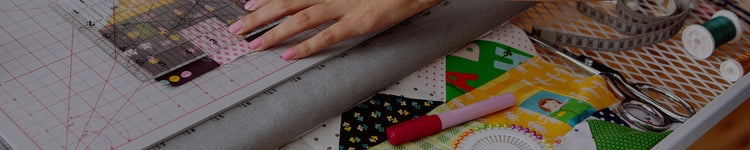
To get started, you'll need three key tools often called the "holy trinity" of quilting: A Rotary Cutter (a 45mm size is the most versatile). A Self-Healing Cutting Mat (an 18" x 24" size is a good start). A Quilting Ruler (a 6" x 24" ruler is perfect for cutting strips and trimming). You will also need quality cotton quilting thread, pins or clips, and a seam ripper.

45mm: This is the most common, all-purpose size. It's great for cutting multiple layers of fabric (up to 4-6) and is perfect for strips, squares, and triangles. 60mm: This larger blade is ideal for cutting through thicker materials or multiple layers at once (up to 8+). Many quilters prefer it for cutting batting or long, straight strips. Smaller sizes (like 28mm or 18mm) are used for cutting tight curves and small, intricate shapes.

Yes. While all-purpose sewing thread can be used for piecing (sewing the blocks together), "quilting thread" is specifically designed for the quilting part (stitching the top, batting, and backing together). Quilting thread is typically stronger, smoother, and often mercerized or coated to help it glide through multiple layers and batting with less lint and fewer breaks.

Batting is the thin, insulated layer that goes in the middle of your "quilt sandwich" (quilt top, batting, and backing). You choose it based on fiber and loft: Fiber: 100% cotton is traditional, breathable, and gives a flat, crinkled look after washing. Polyester is lighter, has more loft (puffiness), and resists shrinking. Blends (like 80/20 cotton/poly) offer a popular middle ground. Loft: This is the thickness. Low-loft is thin and flat (best for wall hangings or table runners), while high-loft is thick and puffy (best for tied comforters).

While you can do most work with a basic 6" x 24" ruler, specialty rulers are designed to make specific cuts faster and more accurate. For example, square-up rulers (e.g., 6.5" x 6.5") are used to trim blocks to a perfect, uniform size. There are also rulers made specifically for cutting triangles, diamonds, circles, and other common quilting shapes.